
Eco-Campus
International Conference 2024

Getting Higher Level Education Climate Ready
26-27 April 2024 📍Escola Superior de Educação de Lisboa (Lisbon School of Education), Portugal
OVERVIEW
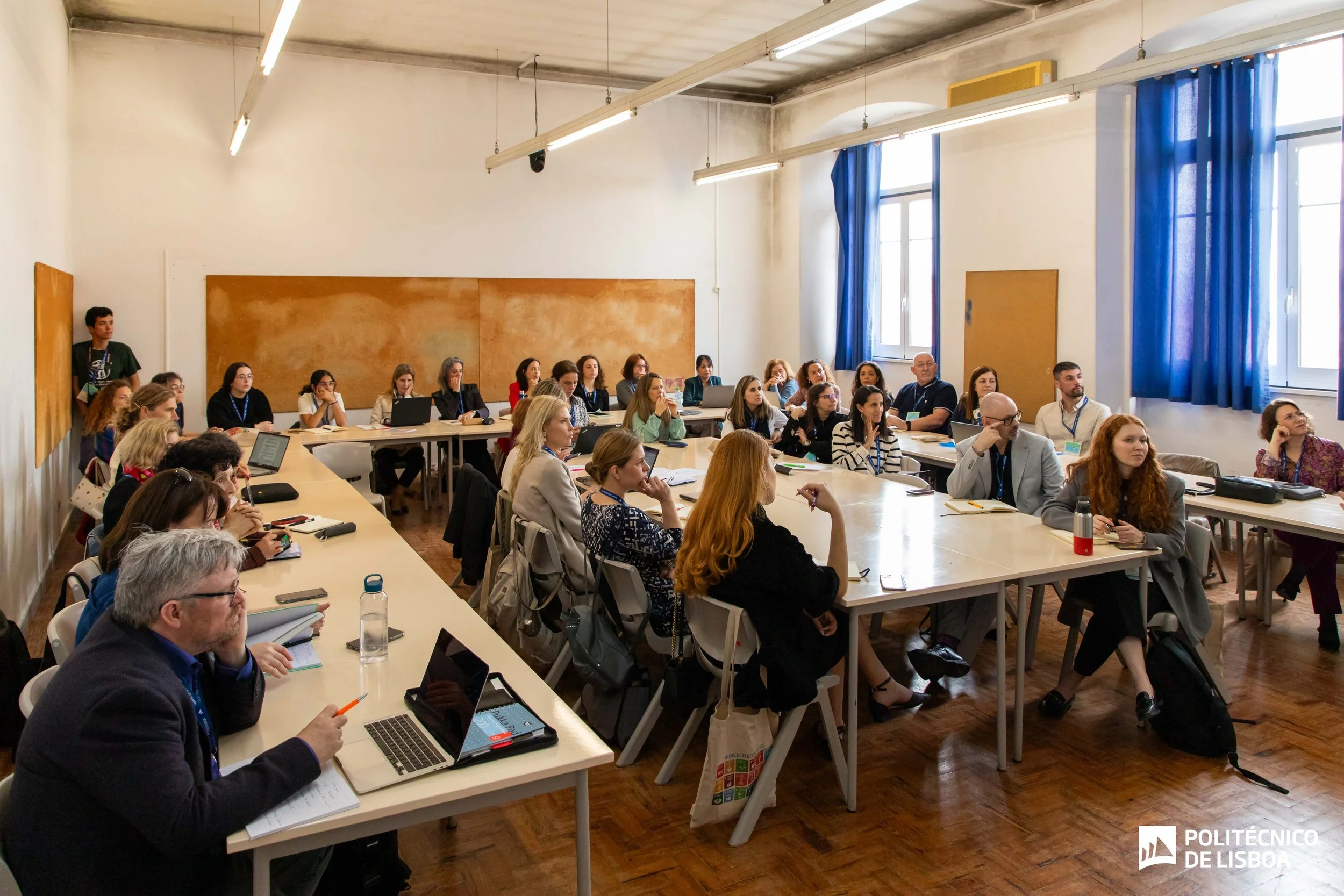
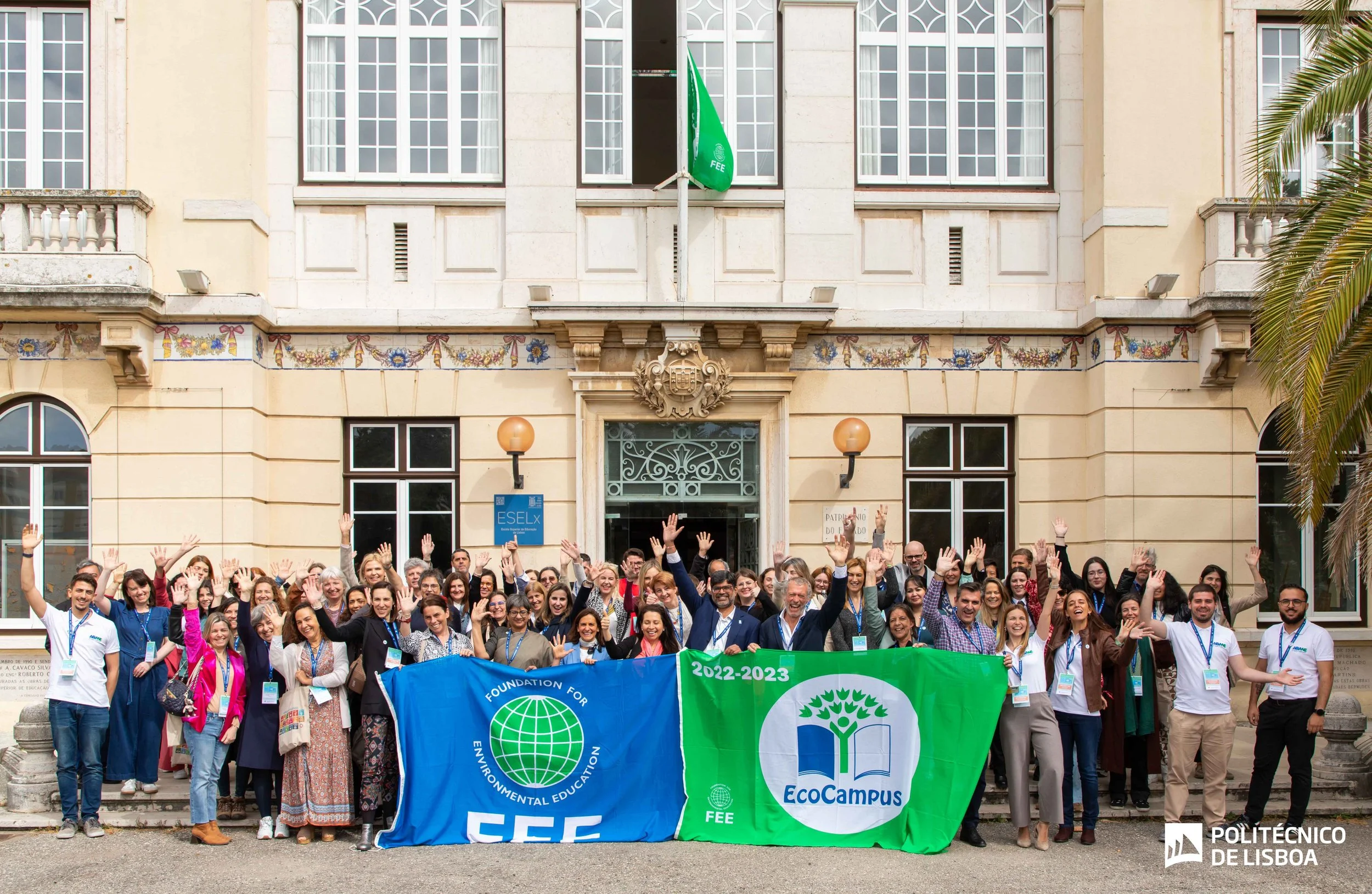
The first Eco-Campus International Conference was held on 26 and 27 April, 2024 at the ESELx - Escola Superior de Educação de Lisboa (Lisbon School of Education) of the Polytechnic University of Lisbon (IPL), in Benfica, Lisbon. Organised by Associação Bandeira Azul de Ambiente e Educação (ABAAE) (FEE member in Portugal) and the Foundation for Environmental Education (FEE) in collaboration with the Polytechnic University of Lisbon, the conference welcomed 110 attendees, including students, academics, facilities staff, and administrators from 15 countries.
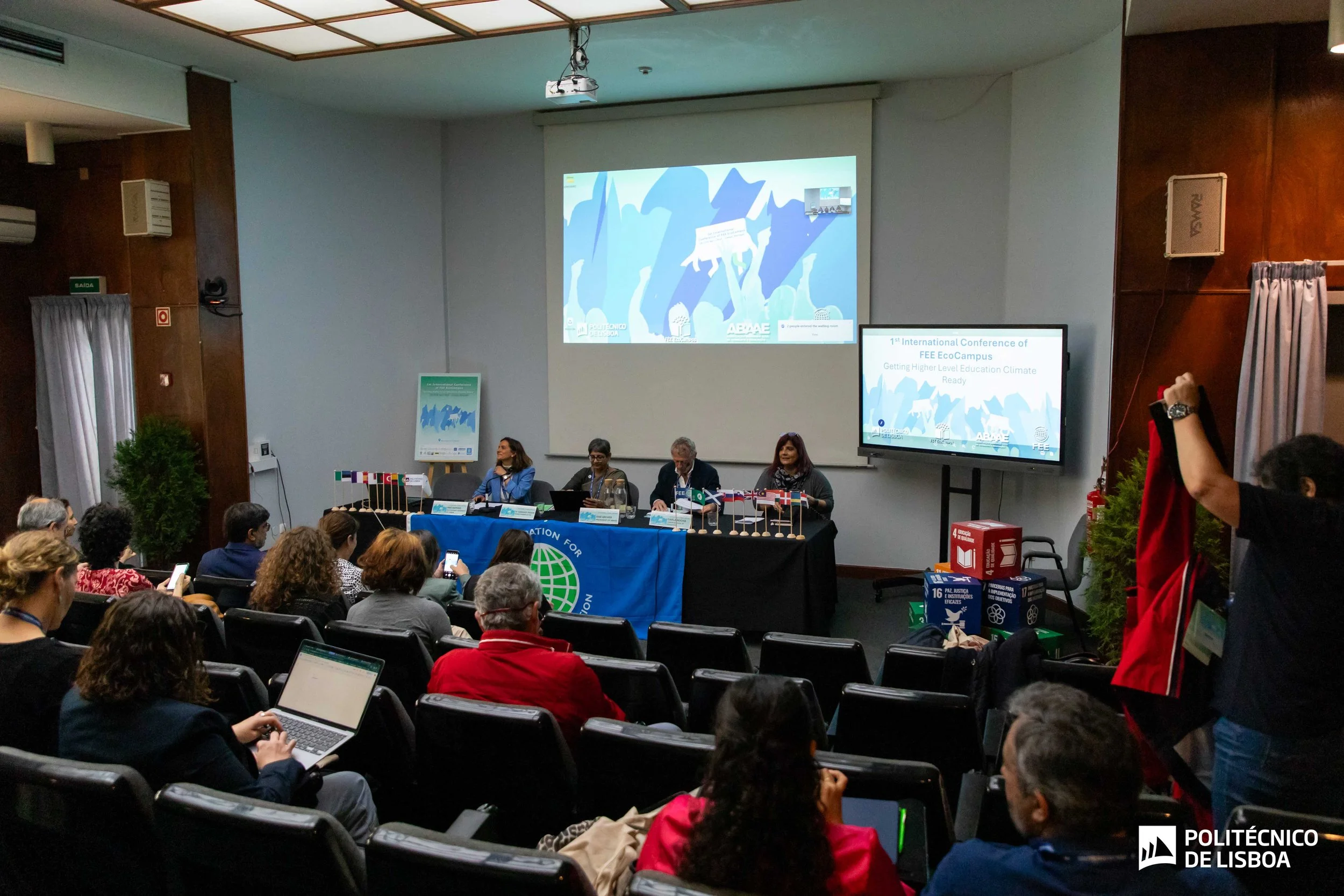
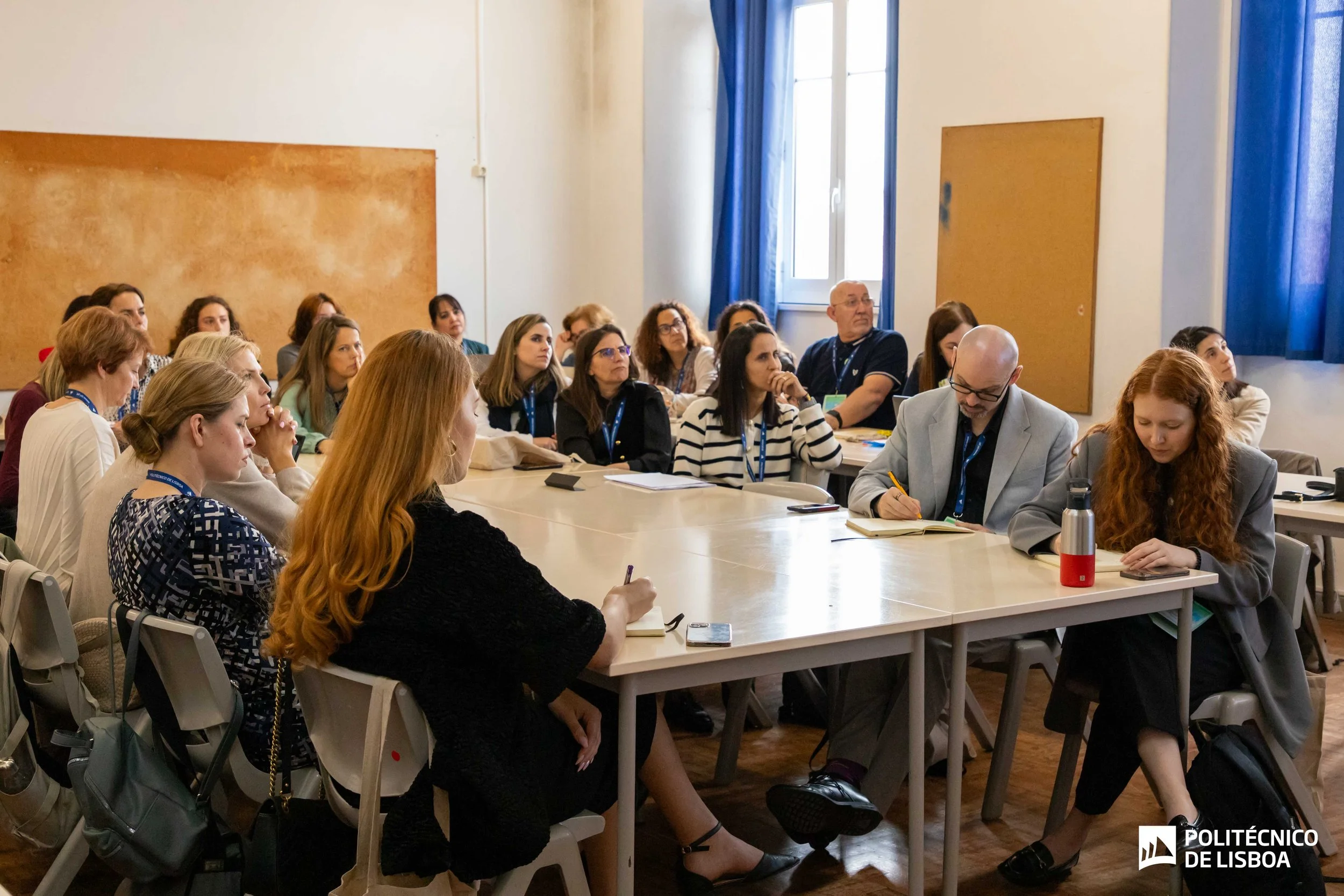
CONFERENCE PRESENTATIONS
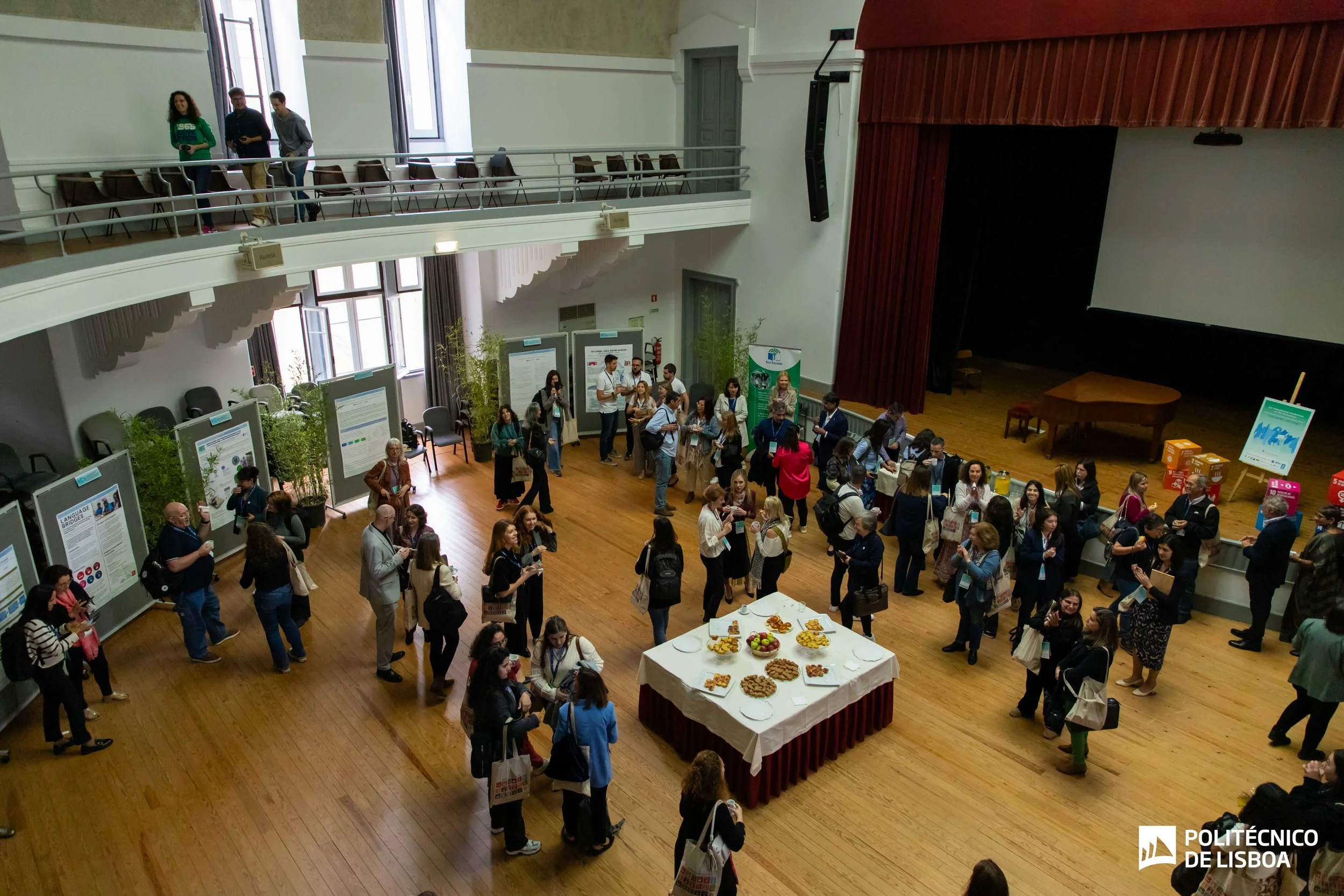
A total of 82 presentations and workshops were given during parallel and plenary sessions and 12 posters exhibited. The topics covered four themes linked to greening Higher Education:
From Eco-Schools to Eco-Campus
Training and Curricula
Innovation and Development
Eco-Campus and the Community
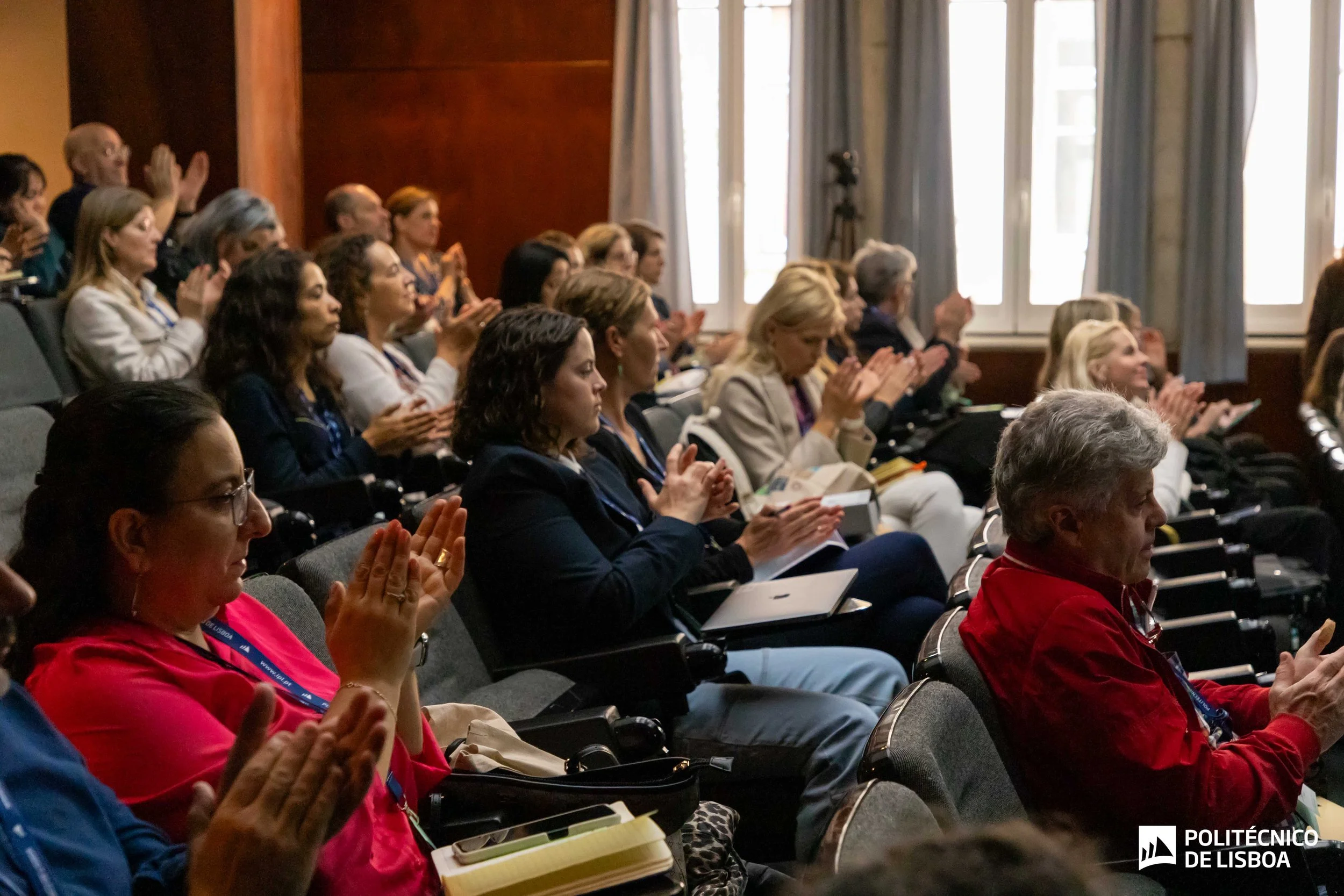
In addition, plenary sessions were given by Arjen Wals, Wageningen University, Júlia Seixas, NOVA School of Science and Technology (FCT NOVA), Simon Wanda UNESCO Secretariat of the Greening Education Partnership, and Michael John O´Mahony, Honorary Board Member of FEE and former Director of Education Unit of An Taisce (Ireland FEE member).
FEE is co-coordinating Pillar One of the UN’s Greening Education Partnership (GEP), 'Greening Schools' for UNESCO, with a goal for 2030 where "All countries will have adopted a green school accreditation scheme with at least 50% schools, colleges, and universities with green accreditation and are operating sustainably." Among the plenary sessions, a 90-minute workshop was organised by FEE which aimed to contextualise UNESCO's draft Green Schools Quality Standards, and define what a quality ‘Whole Institution Approach’ looks like in the tertiary education sector. A final 90-minute plenary discussion focused on ‘Eco-Campus in the 21st Century’, looking in depth at the opportunities and challenges discussed and how they can be addressed as the programme is scaled up to meet the targets of the GEP.
CONFERENCE OBJECTIVE 2024
To highlight Eco-Campus as a key programme for integrating Education for Sustainable Development (ESD) into Higher Education in a Whole-Institution Approach (WIA).
To learn more about the many dimensions of a WIA in Higher Education and understand from our vast network what it means in practice for buildings, infrastructure and facilities, as well as teaching and learning, research, education, governance, and community engagement.
To explore the challenges that need to be considered and addressed in greening Higher Education Institutions (HEIs) and make sure the Eco-Campus programme is fit to help meet Greening Education Partnership (GEP) target of at least 50% of schools, colleges, and universities with green accreditation whilst ensuring quality and impact throughout the programme.
Key insights
A diverse and complex task: importance of a holistic approach, multi-disciplinary approach and integrated approach to sustainability and climate education education across institutions and in all aspects of their operations, curricula, teaching and learning practices, and governance.
The challenge of student engagement: Identified gap between students' environmental values, knowledge of climate change, and behaviours, while students emphasized the importance of addressing obstacles that prevent students from engaging in sustainability efforts such as youth empowerment.
Inspiring examples seen in new forms of pedagogy and research: practical approaches fostering creativity, innovation, and transformation in higher education pedagogy, including outdoor and place-based learning, arts-based approaches, design thinking pedagogies.
Targeting of the informal curriculum in projects that impact the environment: potential impact of Eco-Campus projects addressing the informal curriculum in higher education “learning without learning” with campus-based initiatives eco-trail construction, species interpretation, ecosystem recovery, sustainable land use, and healthy eating promotion.
Projects which move from the informal to the formal curriculum: YRE programme integration in teaching as a solution whereby staff and students running Eco-Campus programmes and projects, actively look at the curriculum and see how their project can be integrated.
Rethinking the purpose and paradigms of sustainability education: advocated for a reawakened Eco-Consciousness in higher education content, and pedagogy which views humanity as part of, and not separate and above nature.
ORGANISERS

Foundation for Environmental Education (FEE) is a global non-governmental organization established in 1981, dedicated to promoting environmental education and sustainability worldwide. With over 100 member organisations in 81 countries and 40 years of impactful experience, FEE empowers institutions and communities through its internationally six recognized environmental education programmes: Eco-Schools, Young Reporters for the Environment (YRE), Learning about Ecosystems & Forests (LEAF), Green Key, Blue Flag and Eco-Campus.
The ABAAE (Associação Bandeira Azul de Ambiente e Educação) is a non-profit environmental NGO based in Portugal. It focuses on education for sustainable development. Founded in 1990, ABAAE is the Portuguese member of the FEE and implement its 6 programmes: Eco-Schools, Eco-Campus, YRE, LEAF, Blue Flag and Green Key.